Partition walls for schools

Classrooms, halls and shared spaces — where robustness, fire safety and safe operation by non-technical staff decide whether a system survives a school year.

How partitions are used in schools

Schools use partitions in two very different duty cycles. Teaching spaces need rapid, frequent reconfiguration between class periods — often by teachers, not facilities staff. Assembly halls, dining areas and sports spaces need occasional but large-scale opening, with panels that may sit stacked for most of the year.

The procurement logic is driven by durability and safety rather than acoustic perfection. A school partition is touched, pushed and occasionally abused by hundreds of people a day, and any mechanism that requires care to operate will eventually be forced.

Budget is usually fixed and public. That makes the cost of ownership — repair, replacement of damaged panels, and downtime during term — more important than the lowest tender price, a point that is often missed in value-for-money evaluation.

What to specify for schools partitions

Robustness to daily handling

Panels in schools are operated by teachers and caretakers under time pressure. Edge protection, track tolerance and simple locking details matter more than premium finishes.

Fire performance aligned with the escape strategy

Corridor and teaching-space partitions often form part of the means of escape. Fire rating, smoke sealing and the behaviour of the assembly when open must be confirmed against the approved layout, not assumed from a catalogue.

Safe operation without training

Operating instructions are rarely read in a school. The system should be usable correctly by an untrained adult, and should fail safe if misused.

Acoustics adequate for concurrent teaching

Two classes running side by side is the normal condition. The acoustic target should be set for the worst realistic pairing, and the junction detail is usually where performance is lost.

Scratch and impact resistance

Furniture, bags and trolleys cause constant low-level damage. Finishes that can be cleaned and locally repaired extend service life far more than harder but unrepairable surfaces.

Maintenance access during term time

Any repair closes teaching space. Systems where the track and trolleys can be serviced without dismantling the ceiling reduce disruption considerably.

What commonly goes wrong in schools projects

Systems specified on laboratory acoustic data, then installed with unsealed junctions so adjacent classrooms hear each other — the most frequent post-occupancy complaint.

Panels too heavy or too complex for teachers to operate, so rooms stay in one layout and the investment is never used.

Tracks damaged within a term because debris was not excluded and staff forced the panels.

Fire strategy assumed the partition would remain closed, but in practice it is left open — a compliance risk identified only at inspection.

Suitable partition types

Manufacturers for schools projects

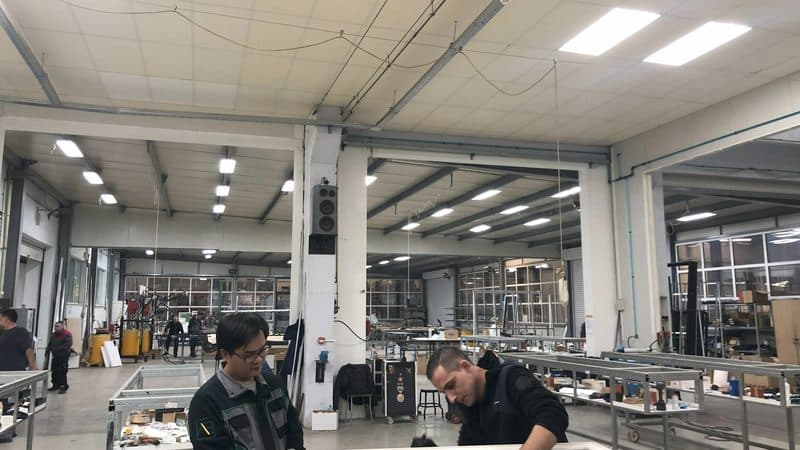
Guangzhou YY Walls Co., Ltd. — product or facility photograph
Operable WallManufacturer photo
Score50.3
ReviewedMovable PartitionAcoustic PartitionFolding Partition+1

Manufacturer of operable wall systems, acoustic motorized movable partitions, folding and sliding partition systems. Established 2000 with a 6,000 sqm facility in Guangzhou, Guangdong.

Location
Guangzhou
Type
Manufacturer
Founded
2000
Export markets
1 listed

Frequently asked questions

What acoustic rating is realistic between two classrooms?

It depends on the activities and the acceptable level of intrusion, and should be set with the school's acoustic adviser against the curriculum use. The practically important point is that the specified rating must apply to the installed assembly including perimeter seals and junctions, not just to the panel.

Should school partitions be manual or motorised?

Small and medium teaching-space partitions are usually manual because they are operated for short periods and motorisation adds cost and failure points. Large hall partitions with heavy panels are often motorised for safety. The decisive factor is whether the intended operators can move the panels correctly and safely within the changeover time available.

How do we keep school partitions in working order long term?

Specify simple mechanisms, require an operating demonstration for staff at handover, keep a small stock of wearing parts, and arrange an annual inspection of track and trolleys. Most failures in schools come from lack of a maintenance owner rather than from the product itself.

Can partitions be retrofitted into an existing school building?

Often yes, but the limiting factor is usually the structure above the ceiling and the available stack space. A structural check of the track support and a realistic survey of where panels park should happen before the system is chosen.

Other project types