Partition walls for churches and worship spaces

Flexible halls, heritage buildings and a hard acoustic problem created by volume, hard surfaces and speech intelligibility.

How partitions are used in churches and worship spaces

Worship buildings often need to serve several uses in one envelope: a main hall, smaller meeting rooms, Sunday school spaces and circulation. Partitions allow that flexibility, but church buildings present acoustic and structural conditions that are unusual in commercial fit-outs.

The acoustic problem is often the reverse of a studio. Instead of isolation, the priority may be intelligibility of speech and control of reverberation in a large, hard-surfaced volume. Partitions that divide a hall also change the acoustic character of the remaining space, sometimes for the worse.

Heritage and older buildings add constraints. Structures may not accept heavy track loads, ceilings may be historic and irreversible fixings may not be permitted. Demountable or free-standing solutions are often preferred because they leave the building fabric intact.

What to specify for churches and worship spaces partitions

Acoustic balance rather than maximum isolation

The target is usually a usable acoustic environment for speech and music in the remaining space, not the highest possible isolation. Over-specifying isolation can waste budget and create dead-sounding small rooms.

Reverberation control in the main hall

Dividing a large hard-surfaced hall changes reverberation time and can reduce speech clarity. The partition's surface and the remaining volume should be considered together, sometimes with added absorption.

Respect for historic fabric

In older buildings, fixings and track supports may need to avoid historic ceilings and walls. Free-standing or lightly fixed systems reduce irreversible intervention.

Structural capacity for track loads

Movable partitions concentrate load at the track. Older structures may not carry it, so the structural check should come before the system is chosen.

Operation by volunteers

Partitions in churches are often operated by volunteers rather than trained staff. Ease of use and clear operating procedures matter as much as technical performance.

Durability and finish consistency

Worship spaces are used frequently and finishes should suit the interior. Materials should be selected for longevity and for consistency with the building's character.

What commonly goes wrong in churches and worship spaces projects

Installing a high-isolation partition that makes the remaining hall acoustically dead and harder to use for music.

Fixing a heavy track to a historic ceiling without a structural check, then discovering the structure cannot carry it.

Assuming volunteers will operate a complex system exactly as intended, without training or a simple procedure.

Treating the partition as a purely visual divider and ignoring how it changes the acoustics of the whole room.

Suitable partition types

Manufacturers for churches and worship spaces projects

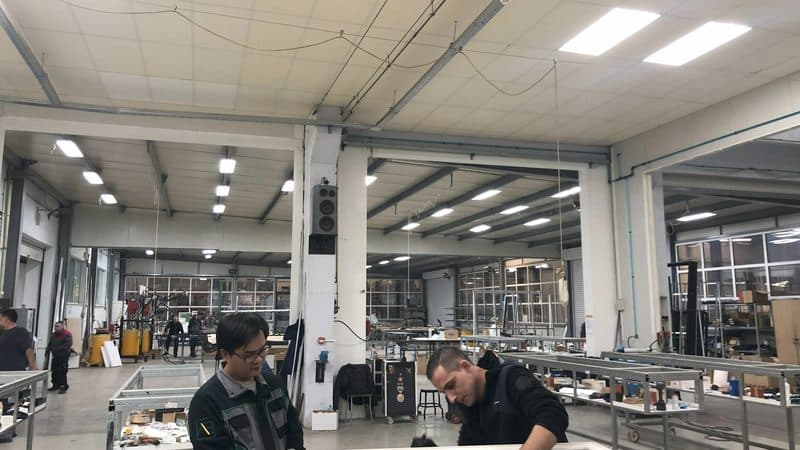
Guangzhou YY Walls Co., Ltd. — product or facility photograph
Operable WallManufacturer photo
Score50.3
ReviewedMovable PartitionAcoustic PartitionFolding Partition+1

Manufacturer of operable wall systems, acoustic motorized movable partitions, folding and sliding partition systems. Established 2000 with a 6,000 sqm facility in Guangzhou, Guangdong.

Location
Guangzhou
Type
Manufacturer
Founded
2000
Export markets
1 listed

Frequently asked questions

What is the best partition for a church hall?

It depends on how the hall is used. Where the space must open and close frequently, a movable or operable wall is common. Where divisions are semi-permanent, demountable systems may be more appropriate. In both cases the acoustic effect on the remaining hall and the structural capacity for track loads should be assessed first.

Will a partition make the main hall sound worse?

It can. Dividing a large, reverberant hall changes its volume and surfaces, which may reduce reverberation but also make speech and music behave differently. The partition should be chosen as part of an acoustic strategy for the room, sometimes with additional absorption or adjustable elements.

Can partitions be installed in a heritage church?

Often yes, with care. The main constraints are fixings and track support. Free-standing or lightly fixed systems minimise intervention in historic fabric, and any fixing to historic surfaces should be discussed with the relevant authority before work starts.

Are movable walls suitable if volunteers operate them?

They can be, provided operation is simple and training is given. Systems that require precise alignment or heavy manual handling are more likely to be misused or left in one position, which defeats the purpose of a flexible space.

Other project types